
Restoring sacred whenua alongside Tunaiti Kaitiaki Roopu
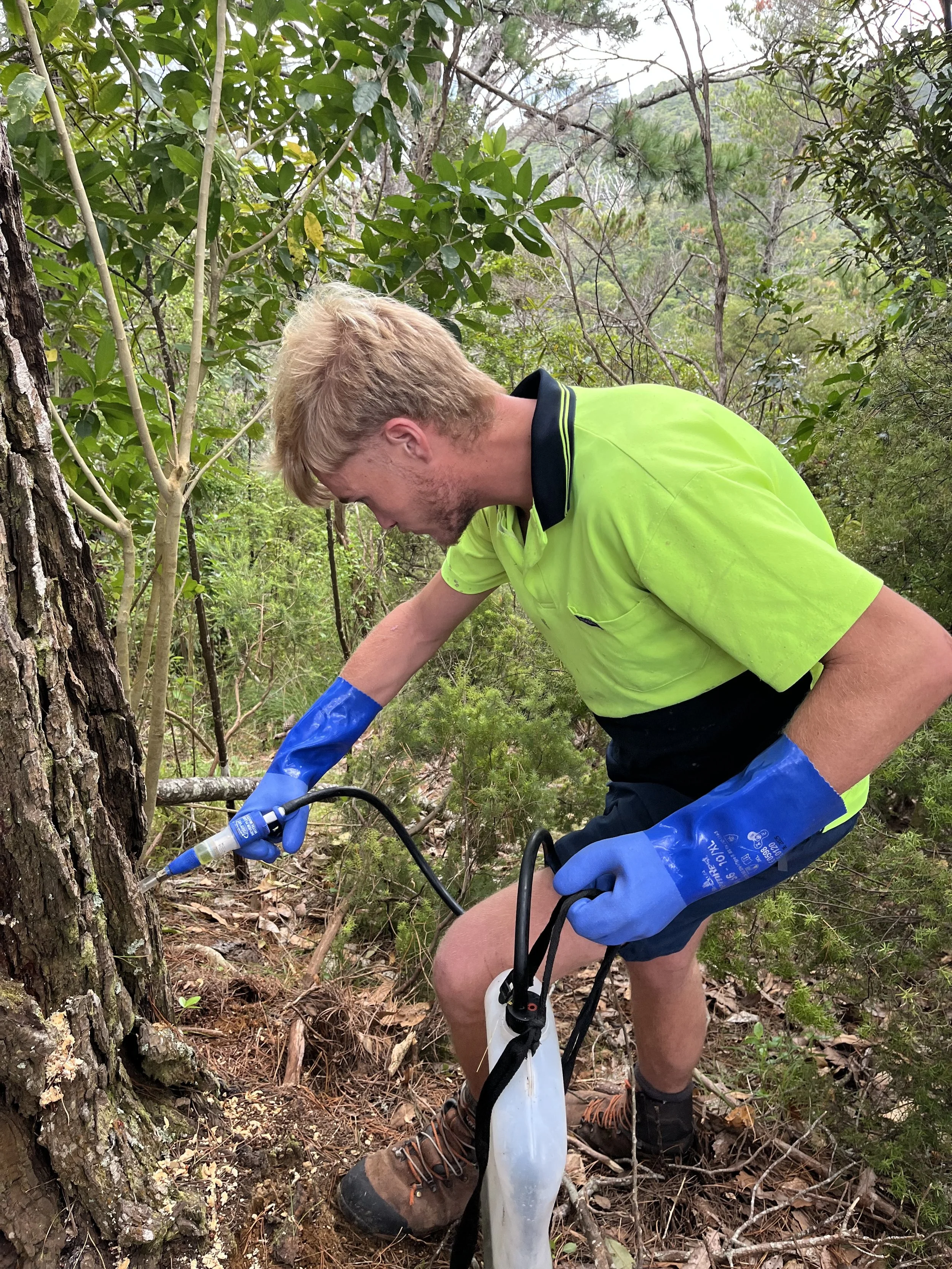
Jeffrey injects herbicide into a wilding pine tree
Wilding pine control on sacred whenua near Whangamatā will restore the mauri of the Māori land block, but it will also help the economy of the coastal town, says tangata whenua guardian group Tunaiti Kaitiaki Roopu.
Predator Free Hauraki Coromandel has been contracted by Waikato Regional Council to undertake the control on the 200 hectare coastal Tunaiti-Otahu block. This is part of Council’s 10-year strategic plan to work with landowners and communities to contain and reduce the spread of wilding pines on the Coromandel Peninsula.
“This wilding pine control will restore the taonga of this place by improving the habitat for our native wildlife,” says Tunaiti Kaitiaki Roopu chairman Errol Gilbert, of Uru Ngawera/Ngati Pu.
“The community will also benefit. Making our land healthier and prettier to look at is good for the economy – it attracts people. So, it’s good for tourism and jobs.”
The control work by the Predator Free Hauraki Coromandel Field Support Team, started in January after a site blessing.
It follows the removal of wilding pines from the wildlife sanctuary Hauturu Motu/Clark Island, off the coast in Whangamatā, in 2024.
For the three-year project, Predator Free Hauraki Coromandel is training two young people from Uru Ngawera/Ngāti Pu in wilding pine control: hand-pulling, hand sawing and pasting, drilling and filling, and felling by chainsaw.
“Longer term, it’s about succession planning and providing opportunities for tamariki to be involved in this kind of work,” says Errol.
“It’s about creating enthusiasm and appetite, along with the skills required, to become contracted service providers in their own right; kaitiaki of their own rohe.”
Wilding pines are a significant pest plant issue across the whole of the Coromandel Peninsula.
They are one of the most invasive tree species groups in the world because of their ability to spread seed and grow fast and tall across many different ecosystem types and landscapes.
They outcompete native plant species and impact on native fauna through habitat loss, thereby desecrating sites of cultural significance and affecting amenity and landscape values, particularly coastal areas that are of importance for tourism and recreation.
The Tunaiti-Otahu block is one of many priority sites identified in the council’s 10-year strategic plan.
“For Uru Ngawera/Ngāti Pu, this land is scared,” says Errol.
“It has numerous archaeological sites, including pepeha areas, urupā and pā sites.
“From a heritage point of view, it’s important to stop invasives from taking over. Wilding pine control is a big piece in the jigsaw of cultural and ecological restoration to restore the mauri life force of this land.”
Waikato Regional Council Pest Plants Team Leader Darion Embling says wilding pines are not only an ecological problem, but they’re an expensive one as well.
“In terms of controlling them, each tree comes with its cost, and new pines will quickly appear from the seed that’s already been spread,” says Darion.
“To be successful, we need to keep going back to remove any regenerating pines, so they don’t become a big problem again and we lose the ground we’ve made.”
“This is why it’s important to have collaborative relationships in wilding pine control. Success depends on funding availability and contributions, landowner and community awareness for control, and availability and capability of contractors.”
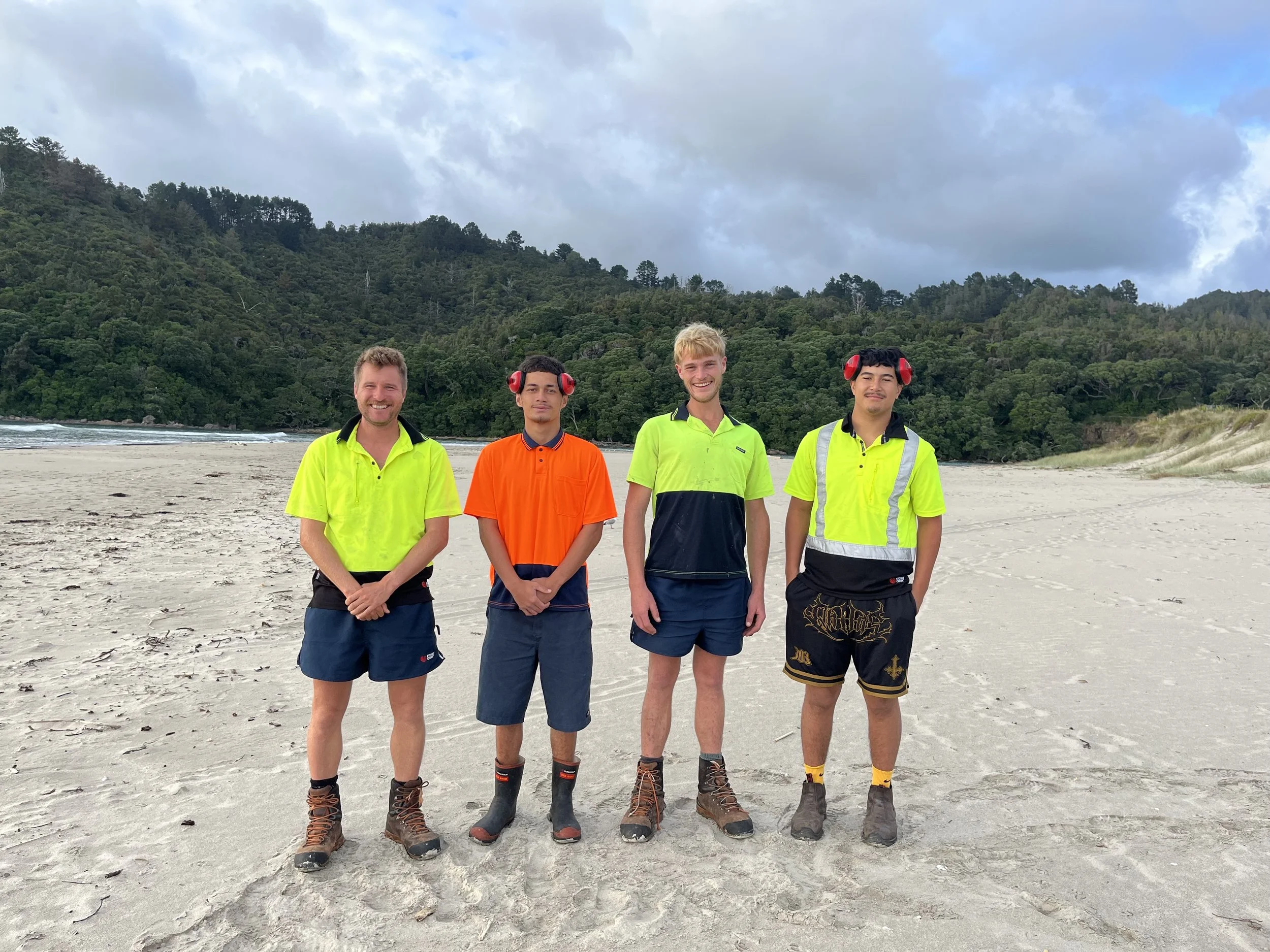
Aaron and Jeffery from Predator Free Hauraki Coromandel Community Trust are training local rangatahi Titoki Kerepeti te Peke and Kingstone Gage in wilding pine control